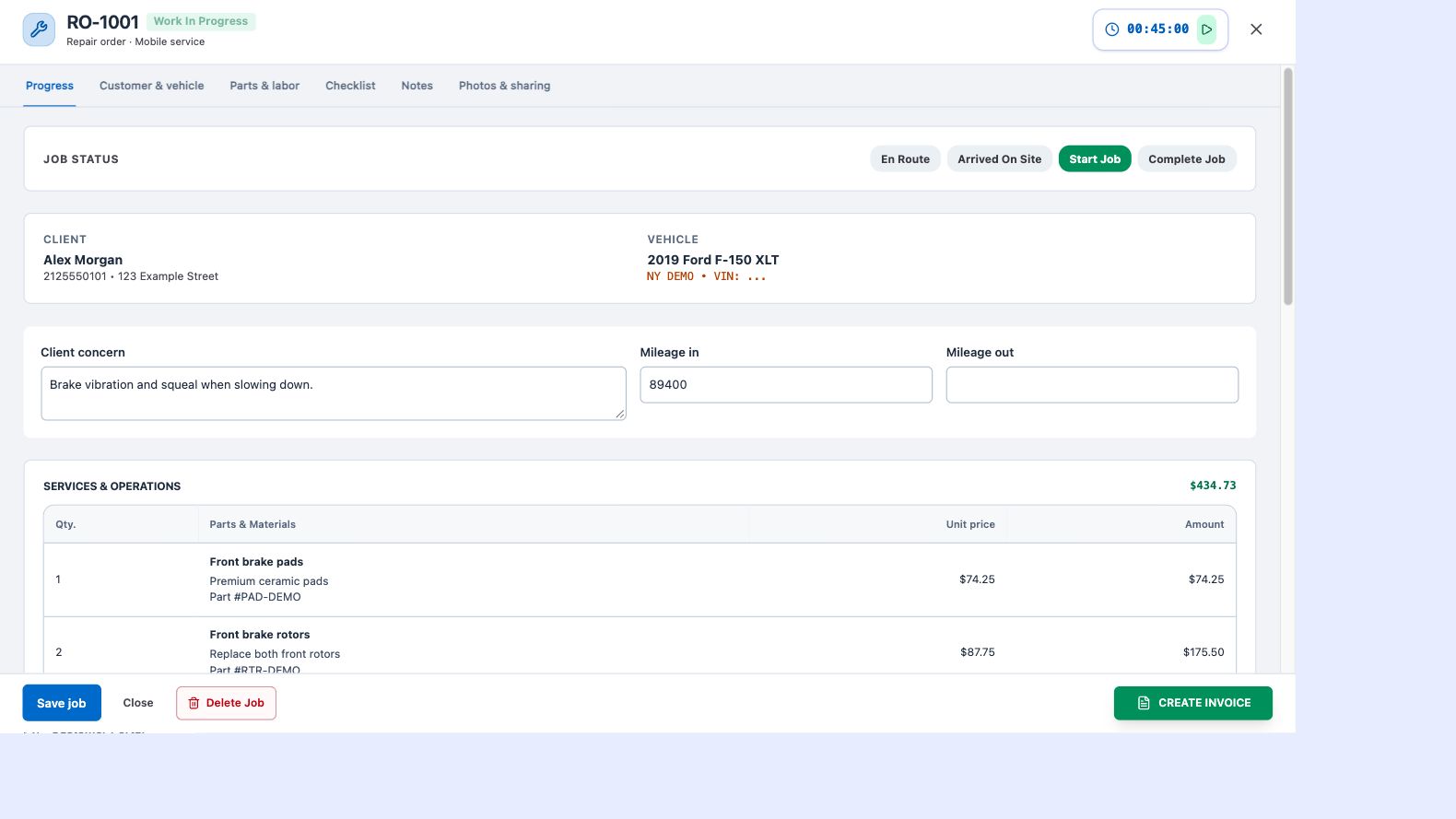
Track time from the repair order
Start and stop the job timer where you are already updating notes, progression and photos. Keep the time record associated with the customer and vehicle so it remains useful after the job closes.
Separate estimated labor from actual activity
Labor-guide hours help you prepare a quote. Actual recorded time helps you review how the work went. A difficult fastener, extra diagnosis or a parts delay can change the day; time information gives you a better basis for reviewing future service estimates.
Keep technician work connected
Review time and assigned work alongside job information and employee-pay records. Clear records help you follow what was worked on and when. They do not replace your business’s policies for paid time, travel time or employee compensation.
Use the record to improve your next job
Look back at repeated services and adjust your labor library when appropriate. Treat the recorded time as one input alongside vehicle condition, access, diagnosis and the scope of the job. A timer cannot determine a fair repair price by itself.